

Views: 0 Author: Site Editor Publish Time: 2025-11-25 Origin: Site
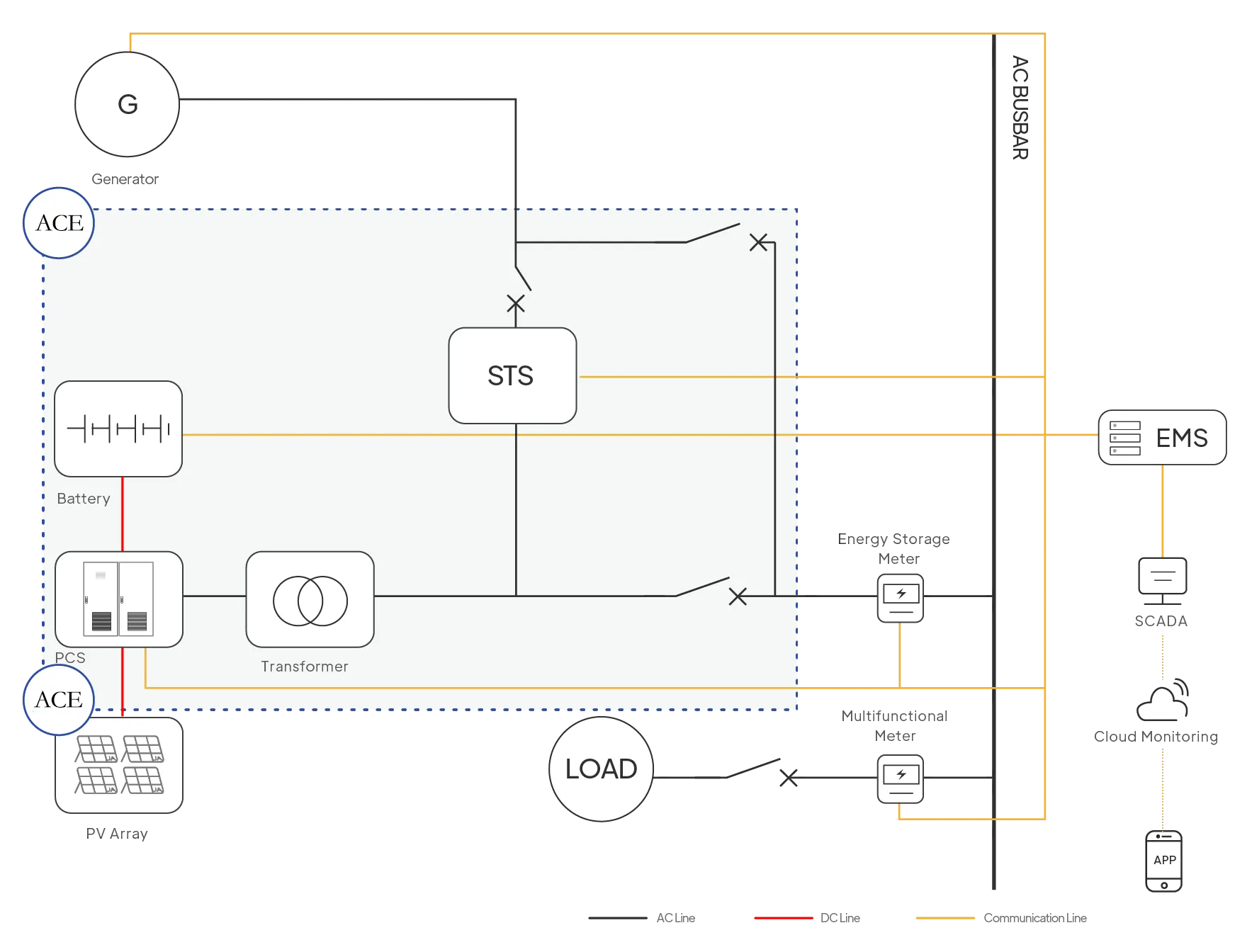
Off-grid power generation systems provide complete energy independence by operating autonomously without connection to the main electrical grid. These systems are essential for remote locations, emergency backup, and sustainable living applications. This article explores the technical configurations, components, applications, and design considerations of off-grid photovoltaic (PV) energy storage systems.
Applicable Scenarios:
Remote mountainous regions, islands, and areas without grid access
Agricultural operations, mining sites, and temporary installations
Core Components:
PV panels
Charge controllers
Off-grid inverters
Battery banks
Key Features:
Fully self-sufficient operation
No grid dependency
Requires careful energy management and sizing
Applicable Scenarios:
Locations requiring high power supply continuity
Critical infrastructure in remote areas
Backup Power Sources:
Diesel generators
Gasoline generators
Biofuel generators
System Characteristics:
Automatic main/backup power switching
Enhanced reliability through hybrid configuration
Generator serves as backup during extended low-sunlight periods
Architecture: PV arrays and batteries connected on DC side
Energy Management: DC-DC converters regulate charging
Advantages:
Higher overall efficiency
Simplified control systems
Reduced conversion losses
Architecture: Storage system connected via AC coupling
Integration: Compatible with existing AC systems
Benefits:
Flexible expansion capabilities
Easy retrofitting options
Modular design approach
Configuration: Integration of multiple renewable sources
Complementary Sources:
Wind turbines
Hydro generators
Biomass systems
System Management:
Smart energy controllers
Load prioritization systems
Predictive energy scheduling
Types: Monocrystalline, polycrystalline, thin-film
Sizing Considerations:
Daily energy requirements
Seasonal sunlight variations
Geographical location factors
Mounting Structures: Ground-mounted, rooftop, tracking systems
MPPT Controllers:
Maximum Power Point Tracking technology
15-30% higher efficiency compared to PWM
Optimal for larger systems
PWM Controllers:
Cost-effective solution
Suitable for smaller systems
Reliable performance
Lead-Acid Batteries:
Flooded lead-acid: Low cost, requires maintenance
AGM batteries: Maintenance-free, good performance
Gel batteries: Deep cycle capability, vibration resistant
Lithium-Ion Batteries:
LiFePO4: 2000-3000 cycles, high safety
NMC: Higher energy density, space-efficient
Battery Sizing Factors:
Days of autonomy required
Depth of discharge limitations
Temperature compensation needs
Pure Sine Wave Inverters:
Clean power output compatible with sensitive electronics
Higher efficiency compared to modified sine wave
Power Ratings: Ranging from 1kW to 100kW+
Features:
Multiple AC output phases
Grid-forming capability
Parallel operation support
Critical Loads: Essential equipment requiring uninterrupted power
Non-Critical Loads: Disconnectable during low-power situations
Load Profiling:
Daily energy consumption patterns
Seasonal variations
Future expansion planning
Energy Balance Calculation:
Daily kWh requirements
System efficiency factors
Battery storage capacity
PV Array Sizing:
Worst-month solar irradiation data
Tilt angle optimization
Shading analysis
DC Protection:
DC circuit breakers
Fuses and disconnects
Surge protection devices
AC Protection:
AC distribution panels
Ground fault protection
Overcurrent protection
Local Monitoring:
LCD displays
LED indicators
Audible alarms
Remote Monitoring:
GSM-based systems
Internet connectivity
Mobile application interfaces
Battery Maintenance:
Regular equalization charging
Terminal cleaning and tightening
Specific gravity measurements
PV Array Maintenance:
Panel cleaning schedules
Inspection for physical damage
Vegetation management
Seasonal Adjustments:
Tilt angle modifications
Load management strategies
Generator integration timing
Efficiency Improvements:
Voltage drop minimization
Temperature management
Component upgrade planning
Remote Homes: Mountain cabins, rural residences
Sustainable Living: Eco-homes, green buildings
Emergency Preparedness: Backup power for urban homes
Telecom Towers: Remote communication infrastructure
Agricultural Operations: Irrigation systems, processing facilities
Tourism Facilities: Eco-resorts, remote hotels
Microgrids: Village-scale power systems
Humanitarian Projects: Disaster relief, refugee camps
Development Projects: Rural electrification programs
Initial Investment:
Equipment costs
Installation expenses
Permitting and design fees
Operational Costs:
Maintenance expenses
Component replacement
Monitoring system subscriptions
System Lifespan: 20-25 years for PV arrays
Battery Replacement: 5-15 years depending on technology
Return on Investment: Fuel savings, reliability benefits
Off-grid power generation systems represent a robust solution for energy independence and reliable power supply in remote locations. Proper system design, component selection, and maintenance are crucial for optimal performance and longevity. As technology advances and costs decrease, off-grid systems continue to become more accessible and efficient, playing a vital role in global energy sustainability and rural electrification efforts.
For specific project requirements, consult with professional system designers to ensure proper sizing and component selection tailored to your unique energy needs and environmental conditions.


